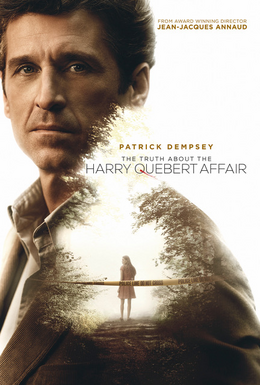
Beyond the Pages: The Harry Quebert Affair's Twists & Literary Secrets
Joël Dicker's sensational novel,
The Truth About the Harry Quebert Affair, burst onto the literary scene like a bombshell, captivating millions with its intricate plot, compelling characters, and a mystery that keeps readers guessing until the very last page. More than just a simple whodunnit, this literary phenomenon is a "story within a story," delving deep into the nature of truth, the power of narrative, and the often-murky relationship between a writer's life and their art. If you've ever been drawn to a tale where every perceived answer only leads to more questions, then embarking on
The Harry Quebert Affair: Unraveling the 33-Year-Old Murder is an absolute must.
The Unfolding Enigma: What is The Harry Quebert Affair About?
At its heart,
The Harry Quebert Affair introduces us to Marcus Goldman, a young author struggling intensely with writer's block after the runaway success of his debut novel. His publisher is suing, his agent is exasperated, and Marcus is desperate for inspiration. In this state of creative paralysis, he seeks refuge and guidance from his former English professor and literary mentor, Harry Quebert, a celebrated author himself, known for his American classic,
The Origin of Evil. Harry lives a seemingly idyllic life in a gorgeous beach house in the quiet, picturesque community of Somerset, Maine.
However, this tranquil setting is shattered when a shocking discovery is made on Harry's property: the skeletal remains of Nola Kellergan, a 15-year-old girl who vanished without a trace back in 1975. Buried alongside her is the original manuscript of Harry’s bestselling book. Harry Quebert, a respected figure, is immediately arrested, accused of murder, and denounced as a pervert, facing the grim prospect of the death penalty. The damning evidence? He was 34 years old when Nola disappeared, making the discovery of their secret love affair, revealed through Marcus's subsequent investigation, profoundly unsettling.
Convinced of his mentor's innocence, Marcus takes it upon himself to investigate the 33-year-old cold case, driven by loyalty, a desire for the truth, and perhaps, a desperate need for a story of his own. As Marcus digs deeper into the lives of Somerset's residents in 1975, he begins to record his findings, transforming his investigative journey into the very book we are reading:
The Truth About the Harry Quebert Affair. This ingenious meta-narrative blurs the lines between reality and fiction, questioning the very nature of storytelling and authorship.
A Labyrinth of Timelines and Characters
One of the novel’s most captivating, yet challenging, features is its intricate, multi-layered timeline. The narrative expertly weaves between three distinct periods:
*
2008: Marcus Goldman’s contemporary investigation into Nola’s murder and his struggle with writer’s block.
*
1975: The events leading up to Nola Kellergan’s disappearance, offering glimpses into the lives of the inhabitants of Somerset and the forbidden romance between Harry and Nola.
*
Marcus’s Own Life: Flashbacks revealing Marcus’s past relationship with Harry as his college professor and mentor, illuminating the profound impact Harry had on his development as a writer.
This non-linear structure, while demanding careful attention from the reader, is crucial to building suspense and revealing the truth in tantalizing fragments. It allows Dicker to continually pull the rug out from under the reader, ensuring that just when you think you have a handle on the truth, new revelations emerge to muddy the waters once more.
The novel is also populated by a cast of truly memorable and often enigmatic characters, each holding a piece of the puzzle:
*
Nola Kellergan: Far from being a mere victim, Nola emerges as a complex, almost ethereal figure—a muse who inspired passion and obsession in those she encountered, yet harbored her own secrets and inner demons. Her true nature is one of the central mysteries.
*
Tamara Quinn: The sharp-tongued owner of the local diner, whose keen observations and personal ambitions (including designs on Harry as a potential son-in-law) offer unique perspectives on Somerset’s inhabitants.
*
Luther Caleb: Harry's chauffeur, a man whose life was tragically marked by brutal violence, leaving him physically deformed but endowing him with a sensitive, artistic perception of the world. His quiet presence and unspoken insights are surprisingly pivotal.
Each character, no matter how minor they seem, contributes to the rich tapestry of suspicion, motive, and hidden agendas that define Somerset. Understanding their relationships and motivations is key to navigating the narrative's countless twists.
Beyond the Whodunnit: Deeper Themes and Literary Commentary
While *The Harry Quebert Affair* undoubtedly functions as a compelling murder mystery, its true genius lies in its exploration of profound literary and philosophical themes. Dicker uses the murder investigation as a canvas to paint a broader picture of the human condition and the nature of storytelling itself. If you're intrigued by the moral complexities, especially concerning the age-gap relationship, then exploring
The Harry Quebert Affair: The Controversial Love Story & Murder offers further insights.
*
The Intertwined Nature of Writing and Life: Central to the novel is the idea that writing is not merely a reflection of life but an active force that shapes it. Harry Quebert's advice to Marcus throughout the book serves as a meta-commentary on the craft of writing, emphasizing discipline, focus, and the courage to tell one’s truth. The novel implicitly asks: Does writing about an event make it more real? Can a story transform reality?
*
Critique of the Publishing Industry: Through Marcus’s struggles, his demanding agent, and the publisher’s threats, Dicker offers biting commentary on the commercial pressures of the modern publishing world. It delves into the behind-the-scenes marketing, the desperate search for the next bestseller, and the fine line between artistic integrity and commercial viability.
*
The Elusive Nature of Truth: With every revelation, the "truth" about Nola's murder becomes more opaque. The novel challenges readers to question appearances, prejudice, and the narratives people construct to protect themselves or others. It suggests that truth is often multifaceted, subjective, and deeply buried beneath layers of secrecy and personal interpretations.
*
Love, Sacrifice, and Obsession: The forbidden love story between Harry and Nola, however controversial, drives much of the narrative. The novel explores various forms of love—romantic, paternal, obsessive—and the sacrifices people are willing to make, or the crimes they might commit, in its name.
Navigating the Twists: A Reader's Experience and Why It Endures
One cannot discuss *The Harry Quebert Affair* without highlighting its reputation for delivering an abundance of intricate, often shocking, plot twists. The reference to it making "The Killing look" tame is no exaggeration. Just when readers believe they have pieced together the identity of Nola's killer, a new piece of evidence or a fresh perspective shatters their theories, sending them back to the drawing board. This constant re-evaluation is precisely what makes the novel so utterly addictive and why many readers find the ending both entirely unexpected and deeply satisfying.
For new readers embarking on this journey, a few tips can enhance the experience:
1.
Embrace the Complexity: Don't try to guess everything from the start. Allow yourself to be led by Marcus’s investigation and enjoy the ride through its many detours.
2.
Pay Attention to Detail: Dicker is a master of foreshadowing and subtle clues. Small details, seemingly insignificant at first, often come back with profound implications.
3.
Manage Expectations for Prose Style: While some critics have described the prose as "over the top" or "breathless," it’s often a stylistic choice that contributes to the novel’s rapid pace and heightened emotional intensity. Appreciate it for the storytelling vehicle it is.
4.
It's a Marathon, Not a Sprint: With over 600 pages, this is a substantial read. Give yourself time to fully immerse in the world of Somerset and its inhabitants.
The enduring appeal of *The Harry Quebert Affair* lies in its ability to simultaneously function as a gripping page-turner and a sophisticated work of literary fiction. It's a testament to the power of a well-crafted mystery intertwined with profound human questions, proving that some stories, no matter how convoluted, resonate deeply with readers long after the final page is turned. Its successful adaptation into a television series further underscores its compelling narrative and widespread appeal.
Conclusion
The Truth About the Harry Quebert Affair is more than just a murder mystery; it’s a profound meditation on mentorship, memory, the art of writing, and the elusive nature of truth. Joël Dicker crafts a masterful narrative that continually subverts expectations, drawing readers into a complex web of lies, secrets, and a devastating past. Whether you're a seasoned fan of literary thrillers or new to the genre, this novel promises a reading experience that is as intellectually stimulating as it is emotionally gripping, ensuring its place as a truly unforgettable modern classic.